How the CAD Software Industry Is Transforming Modern Engineering and Design
Explore how the CAD Software Industry is reshaping engineering, architecture, manufacturing, and product design with intelligent software solutions, automation, and modern 3D design technologies.


When Boeing engineers finalize the aerodynamic geometry of a new aircraft wing, or when a firm like Gensler runs structural simulations on a high-rise before a single beam is ordered, they are not working from paper blueprints. They are working inside sophisticated digital environments built by the CAD software industry, a sector that has quietly become one of the most consequential forces in modern engineering, manufacturing, and design.
Computer aided design software has moved well beyond its origins as a digital drafting table. Today, the CAD software industry sits at the intersection of artificial intelligence, cloud infrastructure, real-time simulation, and immersive visualization technology. For engineers, architects, and manufacturers across the United States, understanding where this industry is heading is not optional. It is a competitive necessity.
Understanding the CAD Software Industry
At its core, the CAD software industry provides tools that allow engineers, architects, and product designers to create precise digital representations of physical objects, structures, and systems. These tools replace hand-drawn drafting with parametric, data-rich models that can be tested, modified, shared, and manufactured with a level of accuracy that was impossible just a generation ago.
The industry spans a wide range of applications. Mechanical engineers use it to design components for engines and machinery. Civil engineers rely on it to model roads, bridges, and utility systems. Industrial designers use 3D modeling software to develop consumer products from concept to prototype. Architects use architecture design software to generate building models that integrate structural, electrical, and environmental data into a single coordinated environment.
According to Statista, the global CAD software market was valued at approximately $9.7 billion in 2023 and is projected to reach nearly $16 billion by 2030, growing at a compound annual rate of around 7.5 percent. That growth reflects how deeply embedded these tools have become across industries and how far the technology itself has traveled from its roots.
For businesses looking to put these tools to work without building a full in-house engineering team, specialized firms like CadroniX offer professional CAD services that bridge the gap between software capability and practical project execution.
The Evolution of CAD Technology
The story of CAD begins in the early 1960s, when MIT researcher Ivan Sutherland developed Sketchpad, widely considered the first computer graphics program capable of producing technical drawings. It was a research project, not a commercial product, but it proved the concept that machines could be used as design instruments rather than just calculation engines.
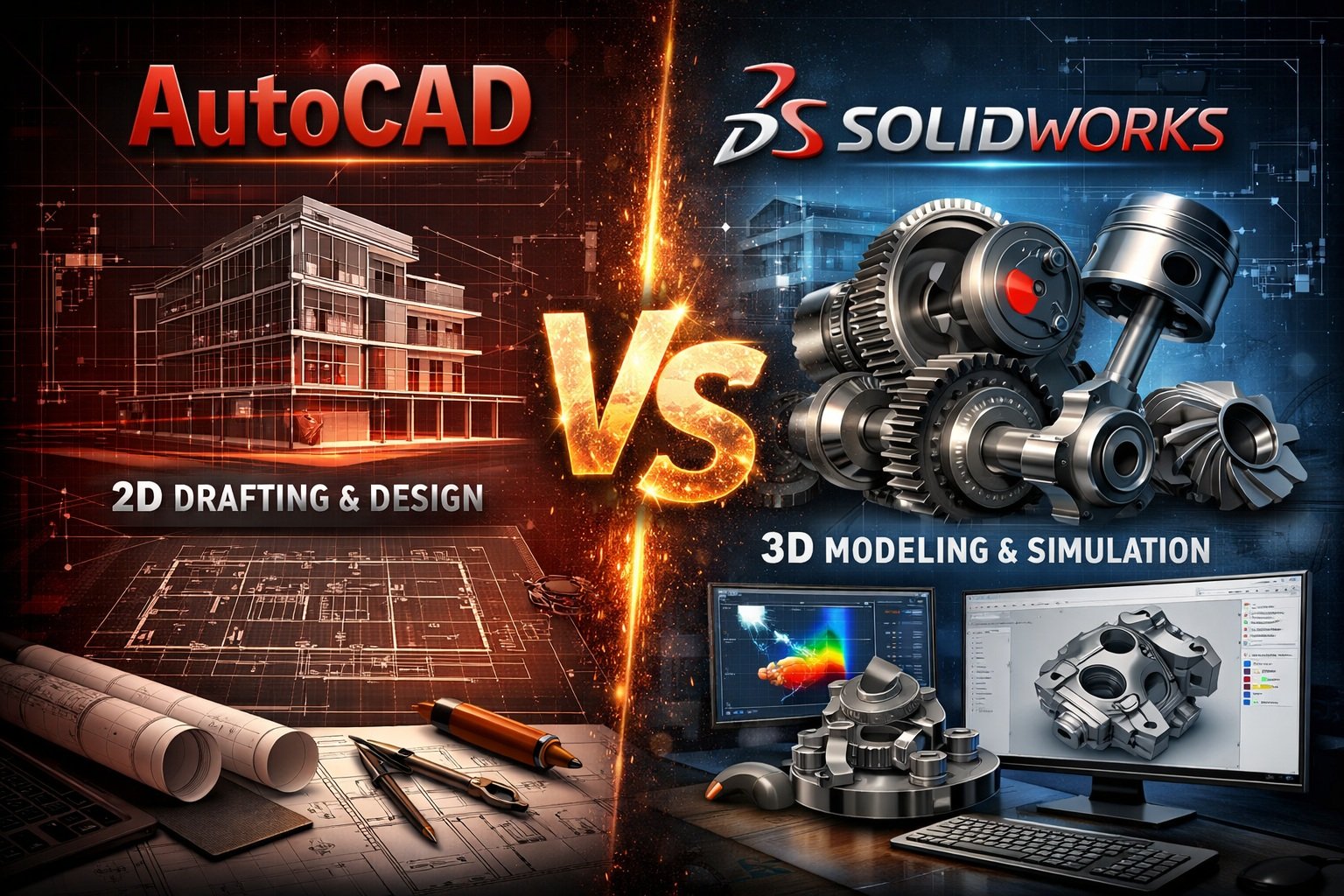
Through the 1970s and 1980s, early commercial CAD platforms emerged for mainframe and then personal computers. Companies like Autodesk, founded in 1982, brought CAD to a broader audience with software like AutoCAD, which gave engineers and architects access to 2D digital drafting on hardware they could actually afford. It was transformative for professional practice, even if the tools themselves were relatively primitive by modern standards.
The shift from 2D drafting to 3D solid modeling in the 1990s marked the next major leap. Parametric 3D modeling, pioneered by software like Pro/ENGINEER (now PTC Creo), allowed designers to build fully dimensional digital objects whose geometry could be driven by mathematical relationships. Change one parameter and the entire model updated accordingly. This was not just a productivity tool. It changed how engineers thought about design from the ground up.
The 2000s brought simulation capabilities into mainstream CAD workflows. Finite element analysis, fluid dynamics simulation, and thermal modeling began to integrate directly into the design environment, allowing engineers to test structural and physical behavior before any physical prototype was built. The cost of getting it wrong dropped significantly in terms of time, materials, and rework.
Now, in the mid-2020s, the CAD software industry is undergoing another fundamental shift, driven by artificial intelligence, cloud infrastructure, and the integration of immersive technologies. The platforms of today would be barely recognizable to the engineers who used the original AutoCAD on a DOS-based PC.
Why CAD Matters in Modern Engineering
For U.S. engineering firms competing in a global market, CAD design software is not a peripheral tool. It is the central nervous system of product development, and the reasons go beyond efficiency.
Precision is the most fundamental argument. Physical prototyping is expensive, time-consuming, and limited in how many variations it can practically produce. Digital modeling allows teams to create hundreds of design iterations, test each one against real-world physics, and arrive at manufacturing-ready models with tolerances measured in thousandths of an inch, without a single machined part being produced until the design is validated.
Collaboration is equally important. Complex engineering projects involve multiple disciplines, contractors, and suppliers working in parallel. Modern engineering software solutions provide shared data environments where structural engineers, mechanical systems teams, and construction managers work off the same model simultaneously. Conflicts between building systems that would have been discovered only during construction are now caught at the design stage, where they cost a fraction as much to resolve.
According to a McKinsey analysis of digital transformation in capital-intensive industries, companies that fully digitize their engineering workflows can reduce time-to-market by up to 40 percent and cut design-related costs by 20 to 30 percent. Those are not marginal improvements. For a manufacturer managing hundreds of products or a construction firm running parallel projects, those numbers translate directly to competitive positioning.
Firms that want to access high-quality digital design work without a full internal CAD team can find reliable support through professional CAD design services from experienced providers who understand both the software and the engineering requirements behind each project.
CAD Software in Architecture and Construction
Architecture design software has reshaped the built environment industry in ways that are still playing out. Building Information Modeling, universally known as BIM, represents the most significant evolution in how architects and construction teams manage project data. Rather than a conventional 3D model, a BIM environment contains intelligent objects. A wall is not just a shape. It is a material assembly with structural properties, thermal values, cost data, and a relationship to every adjacent element in the building.
Firms like HOK, Skidmore Owings and Merrill, and Perkins and Will have been running BIM-centric workflows for years. The benefits extend across the project lifecycle. Clash detection, which automatically identifies when two building systems physically conflict in the model, prevents expensive coordination problems in the field. Energy analysis tools integrated directly into the design environment allow architects to test building performance against sustainability targets before a permit is filed.
The U.S. construction industry has historically lagged behind manufacturing in technology adoption, but that is changing. The General Services Administration mandated BIM for all major federally funded building projects over a decade ago, and many state agencies have followed. The pressure has pushed adoption throughout the supply chain, including among subcontractors and specialty consultants who previously relied entirely on paper drawings.
Cloud based CAD tools are now enabling something that was logistically difficult just a few years ago: real-time model coordination among teams in different cities. A structural engineer in Chicago, a mechanical systems consultant in Houston, and an architect in New York can work in the same live model, see each other’s changes as they happen, and flag coordination issues without waiting for weekly coordination meetings. The reduction in communication overhead alone justifies the platform investment for large project teams.
Impact on Manufacturing and Product Design
Manufacturing is where the CAD software industry has historically been deepest, and where its evolution is most visible in production outcomes. The concept of the digital twin, a live data-connected virtual replica of a physical product or system, has moved from academic concept to operational reality in some of the country’s largest manufacturing facilities.
General Motors and Ford both use advanced CAD and simulation platforms to design and virtually validate vehicle architectures before committing to physical tooling. In the automotive industry, where a single production line retooling can cost tens of millions of dollars, the ability to catch design or manufacturing errors at the digital stage has obvious economic value. Modern manufacturing design software integrates not just geometry but manufacturing process simulation, allowing engineers to verify that a part can actually be machined, cast, or assembled as designed.
In aerospace, the standards are even higher. Lockheed Martin, Northrop Grumman, and Boeing all operate within digital engineering ecosystems where 3D modeling software is tied directly to structural analysis, materials science databases, and regulatory compliance documentation. The F-35 program, despite its complexity and cost challenges, pioneered model-based systems engineering approaches that are now influencing how defense programs are managed across the industry.
Industrial design technology has similarly changed how consumer products come to market. Companies like Apple, Dyson, and Herman Miller rely on sophisticated industrial design workflows where form, function, manufacturing feasibility, and assembly efficiency are evaluated simultaneously in a shared digital environment. The time between initial concept and manufacturing-ready design has compressed dramatically, and the quality of the output has improved because physical constraints are evaluated far earlier in the process.
AI and Automation in CAD Platforms
AI in CAD software is not science fiction anymore. It is shipping in production tools, being used by working engineers, and it is changing what design work actually looks like on a daily basis.
Generative design is the most discussed application. Instead of a human engineer proposing a geometry and then testing it, generative design algorithms explore thousands of possible design configurations simultaneously, optimizing for specified goals such as minimum weight, maximum stiffness, or specific load paths within defined constraints. Autodesk’s Fusion 360 includes generative design capabilities that have been used by companies like Airbus and General Motors to produce parts that look almost organic, because the algorithm found structural efficiency paths that human intuition would not have reached.
Airbus used generative design tools to develop a partition component for its A320 aircraft. The resulting design was 45 percent lighter than the conventional version while meeting all structural requirements. That is a meaningful weight reduction at commercial aviation scale, where fuel consumption is directly tied to mass.
Beyond generative design, AI is being applied to automated error detection, drawing standards compliance checking, and intelligent part libraries that suggest geometrically appropriate components based on design context. Machine learning models trained on large datasets of engineering designs are beginning to offer predictive recommendations during the design process, effectively a form of AI-assisted engineering judgment that can flag potential problems before a human reviewer catches them.
Engineering automation is moving into repetitive documentation tasks as well. Generating manufacturing drawings, updating bills of materials, propagating design changes through associated documentation are tasks that consumed significant engineering hours and introduced human error risk. Increasingly, they are handled automatically by software that understands the relationships between design elements and their associated outputs.
Gartner has identified AI-augmented design as one of the top emerging technology trends in engineering software, projecting that by 2027, more than 30 percent of major engineering design decisions in manufacturing and construction will involve AI-generated recommendations. That is a fundamental shift in what engineers spend their time on.
Cloud Based CAD and Remote Collaboration
The shift toward cloud based CAD tools was already underway before 2020, but the pandemic accelerated adoption in a way that permanently changed buyer expectations. Engineering teams that had never worked remotely discovered that cloud-hosted platforms allowed distributed work at a quality level that was simply not possible with desktop-only software requiring physical access to a local server.
Onshape, acquired by PTC in 2019, was among the earliest platforms built cloud-native from the ground up. Unlike traditional CAD tools that bolt on cloud file storage as an afterthought, Onshape runs entirely in a browser with full version control, real-time multi-user editing, and access from any device without local installation. For engineering startups and smaller design firms, it eliminated the infrastructure burden of maintaining CAD server environments.
Autodesk’s cloud strategy through its Fusion and AEC Collection platforms, along with Bentley Systems’ iTwin infrastructure for infrastructure engineering, reflect how the major players have responded to this shift. Enterprise CAD environments increasingly resemble software-as-a-service platforms more than traditional perpetual-license desktop tools, with continuous updates, subscription pricing, and integration APIs that connect CAD data directly to ERP, PLM, and project management systems.
The productivity argument for cloud based CAD tools goes beyond remote access. Centralized data management means that every team member is always working from the current version of a design. The version-control nightmare of emailed CAD files, conflicting revision histories, and accidentally overwritten models is largely eliminated. For firms running projects with dozens of consultants and contractors, that reduction in coordination friction is a significant operational improvement.
Statistics and Industry Growth Trends
The growth trajectory of the CAD software industry reflects both the maturation of existing markets and the opening of new ones. Several data points illustrate the scale of what is happening across the sector.
- The global 3D modeling software market alone is expected to grow from $6.5 billion in 2023 to over $12 billion by 2030, according to market research from Grand View Research, driven by adoption in gaming, film, construction, and manufacturing.
- Cloud-based CAD adoption has grown at roughly 18 percent annually since 2019, significantly outpacing the overall CAD market growth rate, as firms migrate from perpetual-license desktop tools to subscription-based cloud platforms.
- According to Autodesk’s internal research, firms using integrated digital design environments report up to 50 percent reduction in design-related rework costs compared to firms using disconnected 2D workflows.
- The simulation software segment, closely tied to CAD platforms, is projected to reach $26 billion globally by 2028, reflecting growing demand for virtual testing across automotive, aerospace, and industrial manufacturing.
- Manufacturing companies using digital twin environments built on CAD data report average maintenance cost reductions of 25 to 30 percent, according to research published by Deloitte on smart manufacturing adoption in U.S. industry.
The U.S. remains the largest single market for CAD design software, accounting for roughly 35 percent of global revenue. Growth rates in Asia-Pacific, particularly in South Korea, Japan, and China, reflect the globalization of advanced manufacturing that is reshaping how U.S. firms compete and collaborate internationally.
Real World Industry Examples
Concrete examples communicate what statistics cannot. Several U.S. and global industry leaders illustrate how the CAD software industry is being applied at scale across different sectors.
Tesla
Tesla’s engineering culture is deeply tied to digital design and simulation workflows. The company’s rapid development cycles, compressed far below traditional automotive timelines, depend on integrated CAD and simulation environments that allow concurrent engineering across vehicle systems. Its manufacturing design is tightly coupled with production automation planning, meaning digital models inform factory floor layout and robot programming as the vehicle design evolves.
SpaceX
SpaceX uses advanced 3D modeling software and simulation platforms to manage the extraordinary complexity of reusable rocket design. The speed at which the company iterates on hardware, notably the Raptor engine, reflects a design methodology that would be impossible without sophisticated digital tooling. Physical hardware testing is preceded by extensive virtual validation, compressing the development cycle without increasing risk.
Skanska USA
One of the country’s largest construction contractors, Skanska has embedded BIM workflows across its project portfolio. On complex hospital and infrastructure projects where coordination among dozens of specialty subcontractors is critical, BIM-based clash detection has measurably reduced field coordination issues. The firm has quantified construction cost savings attributable to digital coordination at the design stage that consistently outweigh the investment in BIM technology and process.
Caterpillar
Caterpillar’s heavy equipment development process relies on integrated CAD and simulation environments that model equipment performance, structural loading, and manufacturing assembly simultaneously. Digital prototyping has allowed the company to reduce physical prototype cycles, compressing development timelines while maintaining the durability standards that the brand is built on.
Benefits of CAD Software for Businesses
For companies evaluating or expanding investment in engineering software solutions, the business case rests on several well-documented advantages that show up across firm sizes and industry segments.
- Reduced time to market: Digital design and virtual validation compress product development cycles, allowing firms to respond faster to market opportunities and competitive pressures.
- Lower prototype and rework costs: Catching design errors before physical manufacturing reduces material waste, machining costs, and the expensive engineering time spent managing field changes.
- Improved design quality: Simulation and analysis tools catch structural, thermal, and performance problems that are difficult or impossible to identify through visual inspection of geometry alone.
- Better collaboration: Shared digital environments reduce miscommunication between engineering disciplines, contractors, and suppliers, especially valuable on large multi-party projects.
- Regulatory and compliance support: Many CAD platforms include industry-specific regulatory libraries, tolerance standards, and documentation tools that reduce compliance risk and audit preparation time.
- Scalability: Cloud-based CAD platforms allow firms to scale their engineering infrastructure without proportional investment in on-premise hardware and IT support.
For project teams that need professional-grade output but lack the in-house capacity to produce it, working with a qualified provider of CAD drafting services can deliver the precision and documentation quality that modern engineering projects demand, without the overhead of maintaining a full internal drafting department.
Challenges in CAD Adoption
The picture is not entirely straightforward. The CAD software industry presents real challenges for firms at every scale, and understanding them honestly is part of making good platform decisions.
The learning curve on sophisticated CAD platforms is significant. Professional-grade tools like CATIA, Siemens NX, or Ansys require training investment that goes well beyond a software onboarding session. Engineering firms that underestimate this consistently see lower ROI on their software investment because the tools are never used to their full capability.
Data management complexity grows with platform sophistication. Large CAD models with thousands of components, multiple revision states, and cross-reference relationships between assemblies require disciplined data management practices. Firms that implement powerful CAD tools without investing in PDM or PLM systems to manage the data often find that complexity becomes a bottleneck rather than an enabler.
Interoperability between platforms remains a persistent friction point. The engineering supply chain rarely uses a single software ecosystem. A Tier 1 automotive supplier might work primarily in NX, but their customer designs in CATIA and their machining partner uses Mastercam. Translation between formats including STEP, IGES, and JT is better than it was a decade ago but still introduces data quality risks that engineering teams must actively manage.
Cost is a real barrier for smaller firms and individual practitioners. Enterprise CAD platforms with full simulation and collaboration capabilities carry subscription costs that are meaningful for a small engineering consultancy. The emergence of capable mid-market tools and cloud-native platforms has improved accessibility, but the total cost of ownership including training, support, and integration remains substantial for firms with limited technology budgets.
Future Trends in the CAD Software Industry
Several trends are clearly shaping where the CAD software industry goes over the next five to ten years, and most of them point toward deeper integration, greater automation, and broader accessibility across the profession.
AR and VR Integration
Augmented and virtual reality tools are moving from novelty to practical workflow asset in engineering. Design review in immersive environments allows engineers and clients to evaluate spatial relationships at scale before physical production. Companies like Ford and Volvo have deployed VR-based design review as standard practice, reducing the number of physical clay models required during vehicle development. As hardware costs continue to fall and headset ergonomics improve, immersive design review will reach a much broader audience across engineering and architecture.
Digital Twins at Scale
The integration of live operational data with CAD-derived models creates digital twins that evolve alongside the physical asset they represent. Facilities managers, aerospace maintenance teams, and energy infrastructure operators are deploying digital twin environments where sensor data from physical equipment feeds back into digital models, enabling predictive maintenance, performance optimization, and remote diagnostics at a level of fidelity that was previously out of reach for most organizations.
AI-Driven Design Automation
As AI in CAD software matures, the distinction between human design and machine-generated design will become increasingly fluid. The most capable near-term systems will likely function as active design partners, suggesting alternatives, identifying constraint violations, and automatically propagating engineer decisions through downstream documentation, rather than operating as fully autonomous designers. That represents a meaningful shift in what engineering hours are spent on and which tasks require senior-level judgment versus AI-assisted execution.
Democratization of Advanced CAD Tools
Cloud delivery, subscription pricing, and improved user experience design are collectively lowering the barrier to entry for sophisticated CAD capabilities. Engineering students graduating today are entering a market where powerful 3D modeling software is accessible at educational pricing or free in some cases. The implications for the talent pipeline and for the competitive position of smaller firms are both significant. The advantage of access to powerful tools, once reserved for large enterprises with large software budgets, is narrowing steadily.
Sustainability-Driven Design Tools
Environmental performance is becoming a first-class design parameter rather than a post-design compliance check. CAD platforms are integrating lifecycle assessment tools, material carbon footprint databases, and energy performance simulation directly into the design environment, allowing engineers to optimize for environmental impact alongside mechanical performance. As regulatory pressure on embodied carbon in construction and manufactured goods increases, these tools will shift from optional to essential for firms operating in regulated markets.
How Companies Choose CAD Platforms
Platform selection is one of the more consequential technology decisions an engineering organization makes, both because of the depth of integration CAD tools develop into workflows and because migration costs are high. A few considerations consistently drive the decision.
Industry fit matters enormously. The dominant platforms in aerospace, automotive, building design, and electronics design are different for good reason. The technical requirements, regulatory environments, and ecosystem of complementary tools are genuinely distinct. A manufacturer of precision medical devices evaluates CAD platforms against different criteria than a civil engineering firm designing highway interchanges.
Ecosystem integration is a major factor for enterprise buyers. A CAD platform that connects cleanly to an organization’s existing ERP, PLM, and project management systems is worth more than a technically superior tool that exists in isolation. The ability to push design data automatically into procurement workflows, cost estimation systems, and manufacturing execution platforms is where the productivity ROI is often most visible in real project environments.
Vendor support and update cadence matter more in a subscription model than they did in the era of perpetual licenses. Enterprise buyers evaluating cloud based CAD tools increasingly scrutinize the vendor’s development roadmap, the frequency and quality of software updates, and the depth of support resources available, because the value of the subscription depends on the vendor continuing to invest in the platform over time.
For businesses that need qualified execution rather than platform evaluation, providers like CadroniX offer an alternative path: experienced CAD professionals who work within established platforms to deliver finished design and drafting work to project specifications, allowing engineering teams to focus on higher-level problem solving.
Conclusion
The CAD software industry has moved from a productivity tool for individual practitioners to a foundational infrastructure layer for the entire engineering economy. Whether the context is a single product designer optimizing a consumer device, a large architecture firm coordinating a hospital project, or an aerospace manufacturer managing the complexity of a new aircraft program, the quality of an organization’s digital design capability is now directly tied to its competitive position.
For U.S. engineering firms, manufacturers, and technology businesses, the strategic question is no longer whether to invest seriously in CAD design software and the broader engineering software solutions that surround it. That question has been settled. The questions now are which platforms to bet on, how deeply to integrate AI and automation capabilities, how to build the talent and process infrastructure to use these tools effectively, and how to position for a future where the line between physical and digital engineering continues to dissolve.
The CAD software industry is not just changing how designs are made. It is changing what is possible to design, how fast it can be brought to market, and how confidently it can be manufactured. For the industries it serves, that is a quiet revolution with very loud consequences. Firms that take it seriously now will be far better positioned than those that treat it as a back-office technology decision.
Frequently Asked Questions
What is the CAD software industry and what does it cover?
The CAD software industry encompasses companies that develop tools for computer aided design, including software platforms used by engineers, architects, industrial designers, and manufacturers to create precise digital models of physical objects, structures, and systems. The industry spans 2D drafting tools, 3D modeling platforms, simulation software, and integrated digital design environments that connect design data to manufacturing, construction, and product lifecycle management workflows.
How large is the global CAD software market?
According to Statista, the global CAD software market was valued at approximately $9.7 billion in 2023 and is projected to grow to nearly $16 billion by 2030, representing a compound annual growth rate of around 7.5 percent. The U.S. is the largest single national market, accounting for roughly 35 percent of global revenue.
What are the most widely used CAD design software platforms?
The most widely used professional platforms include AutoCAD and Fusion 360 from Autodesk, CATIA and SolidWorks from Dassault Systèmes, Creo from PTC, Siemens NX, and Revit for building information modeling. Cloud-native platforms like Onshape are gaining adoption for their accessibility and collaboration features. The dominant platform in any given industry reflects both technical requirements and historical ecosystem development in that sector.
How is AI changing CAD software?
Artificial intelligence is being integrated into CAD platforms in several significant ways. Generative design uses algorithms to explore thousands of design alternatives simultaneously, optimizing for specified performance parameters. Machine learning tools are being applied to automated error detection, drawing compliance checking, and intelligent part recommendations. AI is also being used to automate documentation tasks such as generating drawings, updating materials lists, and propagating design changes through associated files. Gartner projects that by 2027, more than 30 percent of major engineering design decisions in manufacturing and construction will involve AI-generated recommendations.
What are cloud based CAD tools and why are they growing?
Cloud based CAD tools are design platforms that run on cloud infrastructure rather than requiring full installation on local hardware. They offer real-time collaboration, automatic version control, access from any device with an internet connection, and reduced IT overhead for managing server environments. Growth has been driven by the shift to distributed engineering teams, subscription pricing models that lower initial cost barriers, and the competitive advantages of real-time team collaboration on shared design models.
How does CAD software benefit manufacturing companies?
Manufacturing companies benefit from CAD software through reduced physical prototype requirements, earlier detection of design and manufacturing process errors, faster development cycles, and tighter integration between design and production. Digital twin environments built on CAD models enable predictive maintenance and performance optimization in operational facilities. Deloitte research on U.S. smart manufacturing adoption indicates that companies using digital twin environments report average maintenance cost reductions of 25 to 30 percent.
What challenges do engineering firms face when adopting CAD software?
The most common challenges include the significant learning curve on professional-grade platforms, the data management complexity that grows with model sophistication, interoperability issues between different software systems used by different supply chain partners, and the total cost of ownership including training and integration. Smaller firms also face cost barriers that, while improving with cloud-native and subscription-based offerings, remain meaningful relative to their software budgets.
What are the future trends in the CAD software industry?
The most significant near-term trends include deeper AI integration for generative design and automated engineering assistance, broader deployment of digital twin environments that connect design data to live operational systems, growing use of augmented and virtual reality for design review and field visualization, increasing sustainability analysis tools built directly into design workflows, and continued democratization of advanced capabilities through cloud platforms and lower-cost subscription options. The integration of CAD with smart manufacturing systems is also accelerating as industrial automation continues to expand across U.S. manufacturing.
Published By CadroniX Blog.